When Once Upon a Katamari was announced, I assumed the worst. “It’s either a crummy mobile game or some kind of underwhelming spinoff; there’s no way we’re getting an actual new game after nearly 20 years.” But lo and behold, that’s exactly what we got. The game is built on dated tech that is bizarrely outclassed by the engine running 2007’s Beautiful Katamari. The ultimate goal is lazily pretty much the same as that game’s, and there’s a ton of padding, but this is a Katamari game through and through, with tons of imaginative levels and far more content than every other game in the series, making for a must-play for the faithful.
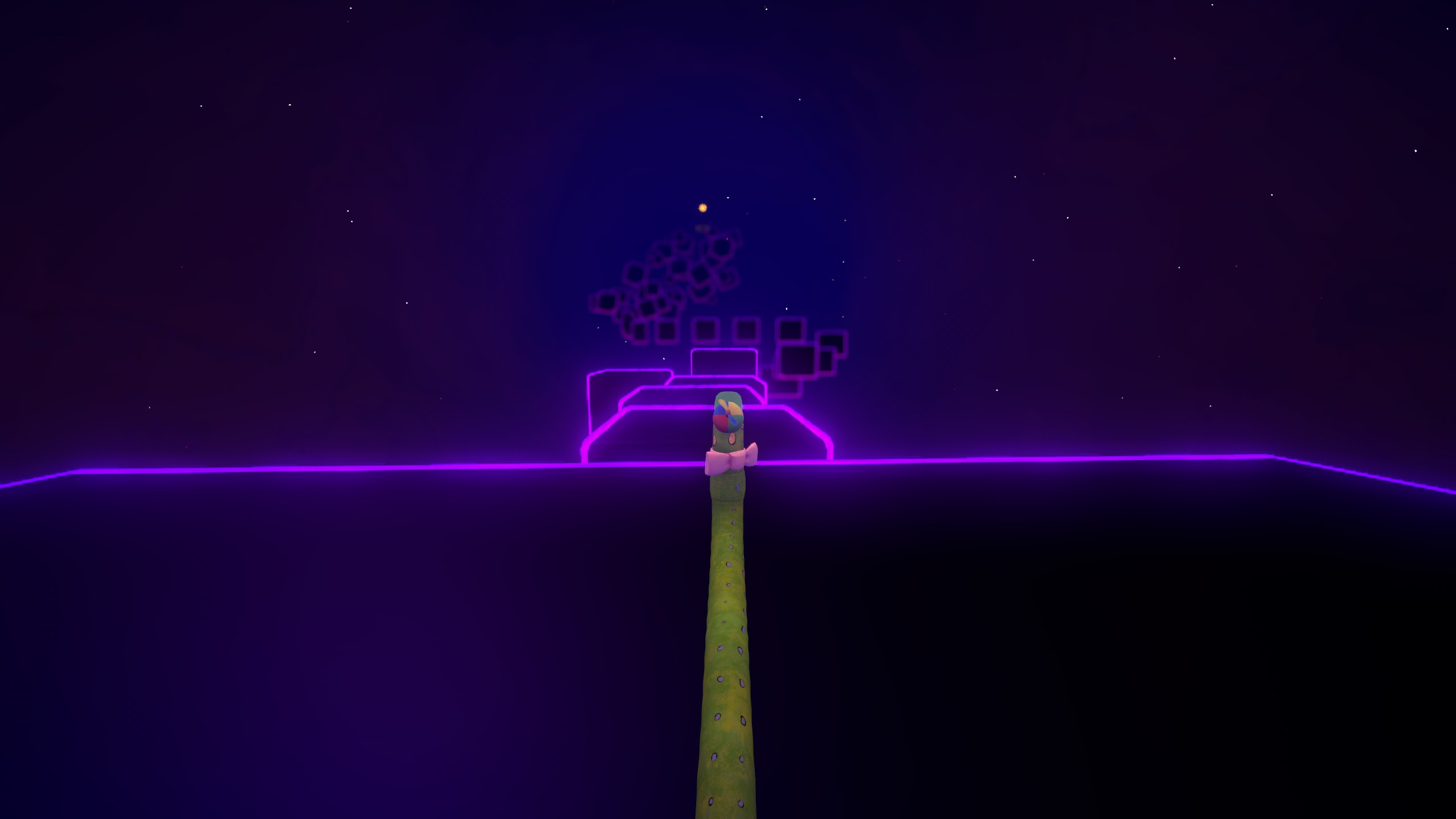
Once Upon a Katamari‘s basic premise is that the king has once again accidentally created a black hole, and it’s up to the Prince and his cousins to roll a bunch of things up again to plug it. Yes, that’s the exact same thing we did in Beautiful Katamari. Weirdly, that game ended with the largest-scaled mission in the series, where you started small and eventually rolled up cities, continents, the entire Earth, the other planets, and any stars and the like on the way to plug up the black hole. This game doesn’t have nearly the same scope, so it just has you roll up the constellations you make in its own two-or three-minute level, before rolling credits.
If that’s disappointing (and it is), it’s massively offset by this being a far, far more creative game than Beautiful Katamari was. The difference is that the black hole was created in a scroll containing cosmic history, so the King of All Cosmos sends you back in time across multiple eras to roll things up, meaning that Once Upon a Katamari is about time travel. While you spend most of your time in historic Edo (the former Japanese capital), you’ll also go to the American Old West, Ancient Greece, the Stone Age, the Ice Age, and more. Previous games could get really samey with how they were, generally set in a single modern Japanese city, but this makes for much more interesting settings.

Granted, all of these are pretty truncated compared to Edo. Most of them have three or four levels to roll things up in, while Edo by itself is similar in length to previous titles on its own. It feels like a bit of a waste of assets, but considering that the game took me about nine hours to roll credits (Beautiful Katamari is closer to three, even if you bought all the DLC levels that were greedily ripped out of the base game. Don’t think we haven’t forgotten that!) it’s not as big of a deal as it sounds. But I do wish the game was more evenly dispersed among the eras instead of focusing so hard on Edo.
There is a reason for this, though, as Edo is the only era that features multiple levels set in the same area, where you’ll continually grow larger until you end up rolling up cities and islands. Doing this with every era would have undoubtedly massively increased the amount of work needed. As such, the other eras do end up feeling like bonuses. With that said, they’ve got some incredibly fun levels, with the Old West and Pirate eras really shining. Once Upon a Katamari simply breathes a ton of new life into the franchise in a really satisfying way, and I’m honestly very happy with it overall.
That being said, the game does contain what I consider to be the absolute worst level in the franchise, which requires you to roll up a Katamari to then throw on a bonfire. This one’s set in a colosseum in Ancient Greece, and it functions as an incredibly obnoxious maze blocked off by people (that can’t be rolled up to boot). You have to basically memorise your route while watching out for pools of water that will instantly fail you, all on a pretty tight time limit. It’s horrendous. Thankfully, no other level in the game is anywhere near this low quality level.

As always, your goal is to use your Katamari to roll up objects in levels that are now era-appropriate, with a huge assortment of unique things to roll up. I mentioned that the game’s got some padding, of course, which will make gameplay take substantially longer for completionists. Levels have three crowns to find (and you’ll need at least 60 to complete the game), as well as up to three cousins (which require at least three separate runthroughs), a present, and many levels also have three challenges requiring you to roll up a certain number of objects (all of these levels will take at least four separate runthroughs.)
The challenges just reward you with tokens, though, which you’ll also get the first time you complete a level. These are only good for buying capsules from King head statues, which only contain emotes (why?) and new faces to customise your cousins with. Presents contain head, face, and body accessories that can also do this, but the faces seem to only work when using special customisation loadouts that have to be saved, which was a poor choice.
You’ll need to find pretty much all the cousins to unlock two extra levels in the game, nearly doubling my playtime. But a lot of this is due to the fact that you basically have to replay the game’s biggest level, which generally takes 18 minutes, at least four extra times to find all of its cousins. It’s an absolute slog that makes unlocking those extra levels a pain, especially since you need to complete the level after finding one cousin to unlock a second one, then again to unlock a third one.

As far as the game itself, Once Upon a Katamari is classic Katamari. It mostly looks and plays just like the remasters we’ve gotten, although there seems to be a lack of momentum that didn’t affect these, plus it can be easier to get stuck. The biggest disappointment here is undoubtedly that there are loading screens when larger instances of the world are loaded in, just like in the remasters. The issue is that Beautiful Katamari didn’t have this and transitioned to the larger zones immediately, so it’s incredibly weird to see a game 18 years later go backward. These loading screens are incredibly jarring, and I wish they weren’t in the game. Additionally, there are times when you just can’t roll up objects that you are much larger than, which is a pretty big annoyance.
Other new aspects on top of the crowns, tokens, and extra customisation include a ship called the SS Prince that has some new features, plus there are now power-ups you’ll find in the levels. The most useful of these is a magnet that immediately grabs every object that can be rolled up that’s in your current range. There’s also a rocket power-up that makes you faster, a stopwatch that freezes time, and, on repeat plays, a radar that shows you where presents, cousins, and crowns are.
None of these power-ups massively transform gameplay, but they do help give the game even more of its own identity. In addition, you can thankfully dash with a single button (although I don’t recall if this was in the remasters, too). Levels all have clear ranks (from D to S) for anyone who wants to track those down, although they don’t appear to do anything.

Despite these quibbles, this is a damn good Katamari game that’s definitely up there with the others overall. It’s got a surprising amount of content and even an online multiplayer mode that probably won’t last long. There are tons of clever levels, and a lot of respect and admiration for the series on clear display. It’ll easily take completionists over 20 hours to get through, so it was very much worth the long wait in that regard. I just wish the game had a more modern engine that eliminated those pesky loading screens.

Once Upon a Katamari: A fine return for the series that's hobbled a bit by its engine and some odd choices, but they don't diminish what's undoubtedly a strong entry. – Andrew Farrell
If you enjoy rolling: