I wasn’t sure what kind of game Onimusha: Way of the Sword would be, but I was fairly certain it wouldn’t be much like previous games. Some were convinced that it would be akin to a Souls-like, which I doubted, but that’s actually not that far from reality. The game isn’t a Souls-like, of course, but it is very reminiscent of Sekiro in some very major ways, even if I’d almost describe it as Sekiro with all of the Souls-like trappings removed.
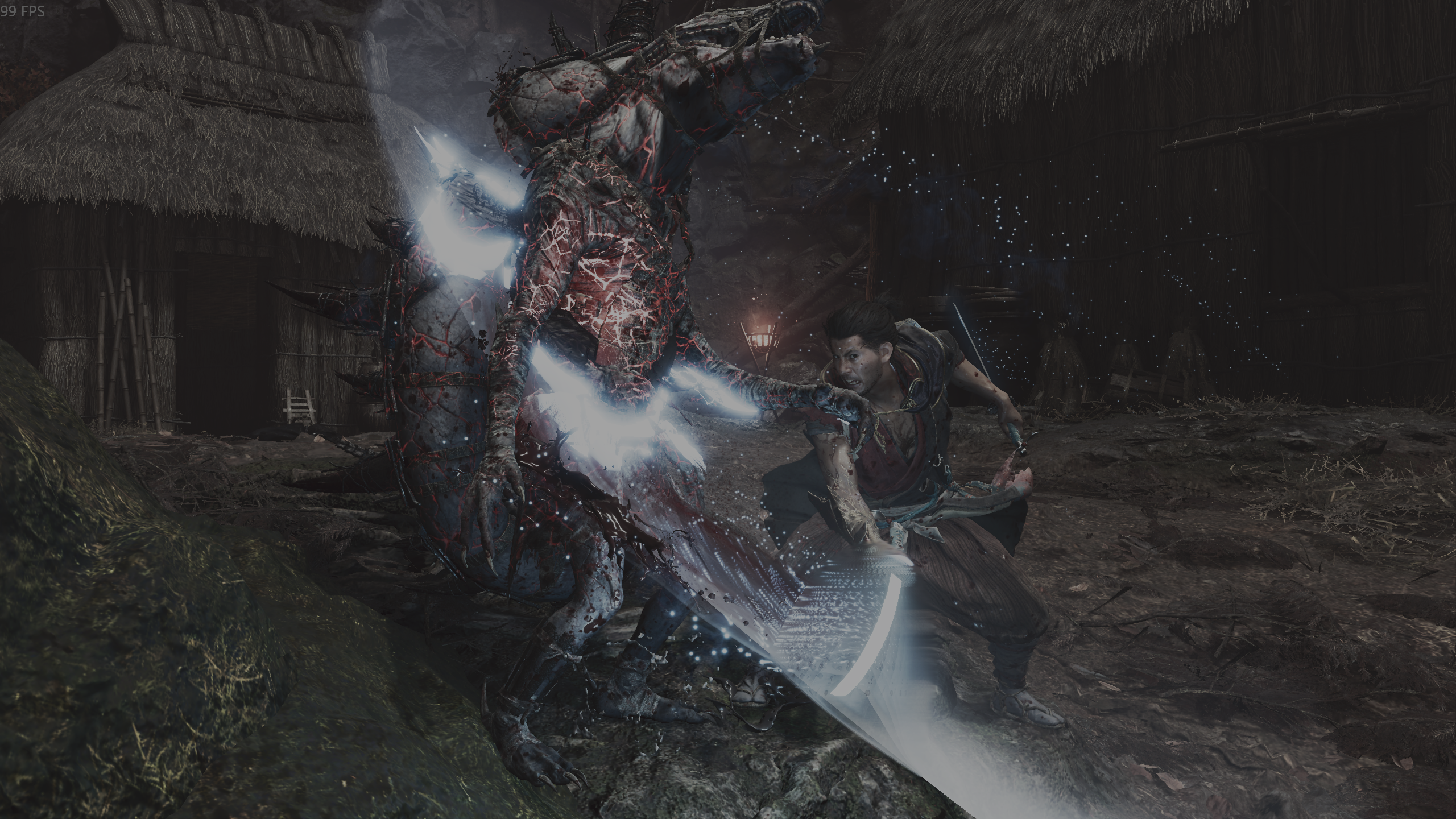
What does that leave, you ask? Parries. So many parries. Anyone hoping for Devil May Cry-esque move variety and expression will absolutely not find it here (as this game doesn’t remotely attempt that), but instead, combat relies on reactions. And, boy, do you have a lot of reactions at your disposal here. Parries from tapping the block button just as an attack hits, deflections that require you to basically parry by pressing another button while holding the block button, perfect dodges, and more (including a special form later on).
All of these feed into each other to make for some pretty intense, impressive fights. Parries fill up your blaze gauge, which allows you to enter a special mode when full. You do extra damage, have more range, and, importantly, do extra stamina damage to enemies when pulling off deflects. Deflects don’t work on all attacks, though. Many attacks can’t be parried either, so they need to be dodged instead.
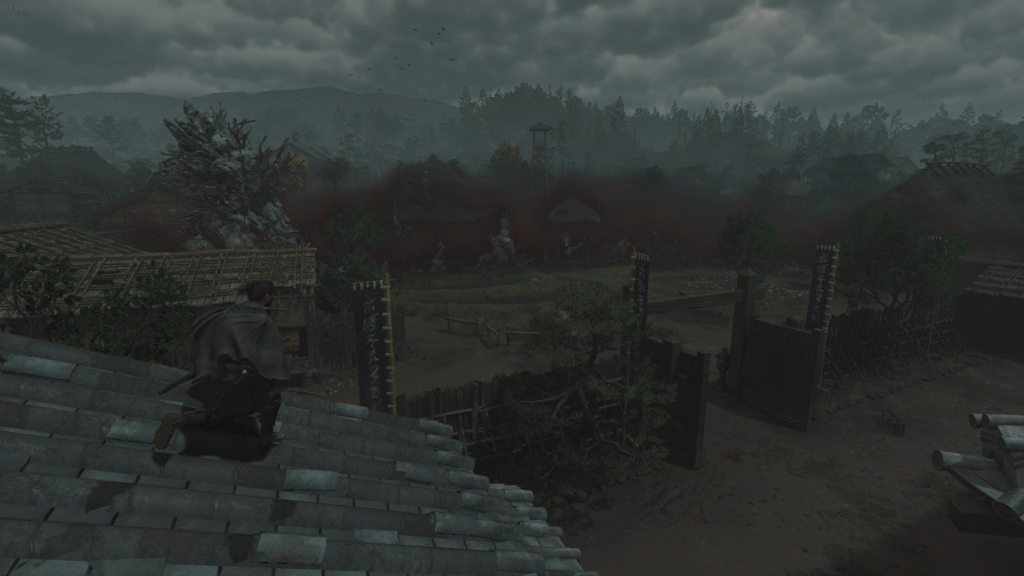
Dodging is best for non-weapon attacks, such as kicks and shoulder rams. When you dodge, you fill up another meter that gives you some free, powerful reflex hits. Then you’ve got your Oni Armaments, which use yet another meter. If three meters seems like a lot, it is, but the systems are nicely integrated, and it never feels like you’re juggling cooldown skills or anything. All of this makes the actual simplicity of your basic attacks feel like less of an issue.
Basic attacks are divided between weak and heavy sword strikes. There aren’t really combos, but you can mix and match them. Each variety also has charge attacks that are actually surprisingly smoothly integrated, but there’s really not much more depth to basic attacking than mashing buttons, although you do have a nifty guard break skill too. This isn’t exactly unlike previous Onimusha games, of course.
Granted, the fighting plays out completely differently due to the aforementioned reactive nature. As such, if you don’t like parries and carefully timing your button presses, you’re not going to have a good time with Onimusha: Way of the Sword. This leads to one of the things I dislike most about the game – the fact that it punishes button presses that aren’t carefully timed.
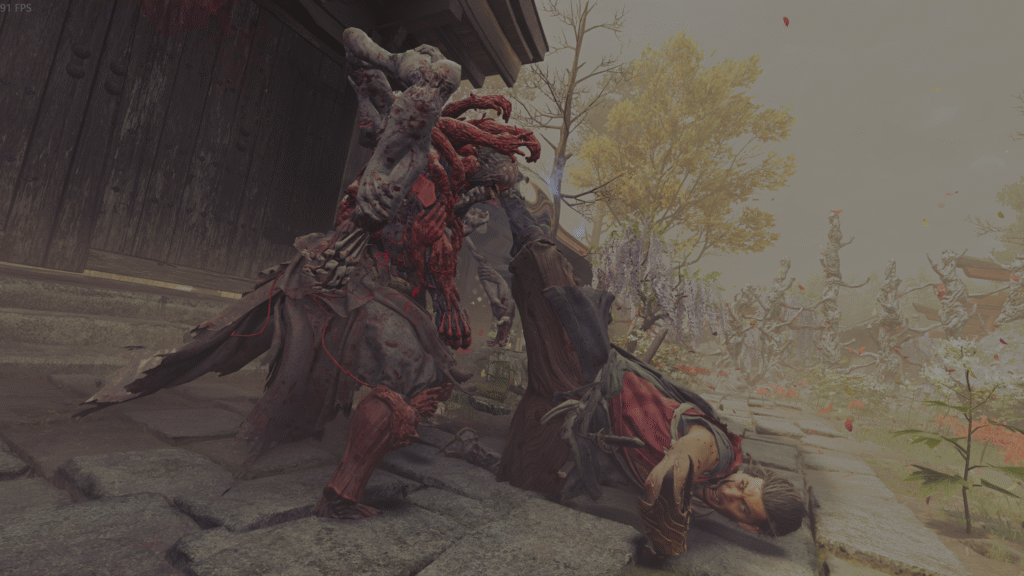
There’s a certain stiffness to some of it because of how rigid the player character’s moves are. Dodging doesn’t give you a bundle of i-frames and roll you out of the way, and you can’t zip from target to target. If an enemy dodges you, you’ll continue to slash where they were until you lay off the attack. If you get hit, you can easily get punished severely for your mistakes.
This is all very much by design, of course. The game doesn’t want you to mash the block or dodge buttons, so that means if you mistime your button presses, you’ll pay for it. On top of that, the windows for the inputs can be incredibly narrow. I can’t tell you how many times I slightly mistimed a parry or dodge input and got ruined for my trouble. This game doesn’t care.
However, this still isn’t a brutally difficult game. Most of the default enemies are easy to deal with simply due to how passive they are. Bosses are challenging, but they’re not Sekiro challenging most of the time, as they tend to only take a few tries. You can have up to seven regular heals on you at all times, so you’re allowed to mess up. The game does make healing risky, though, so you have to time it right or suffer the consequences.
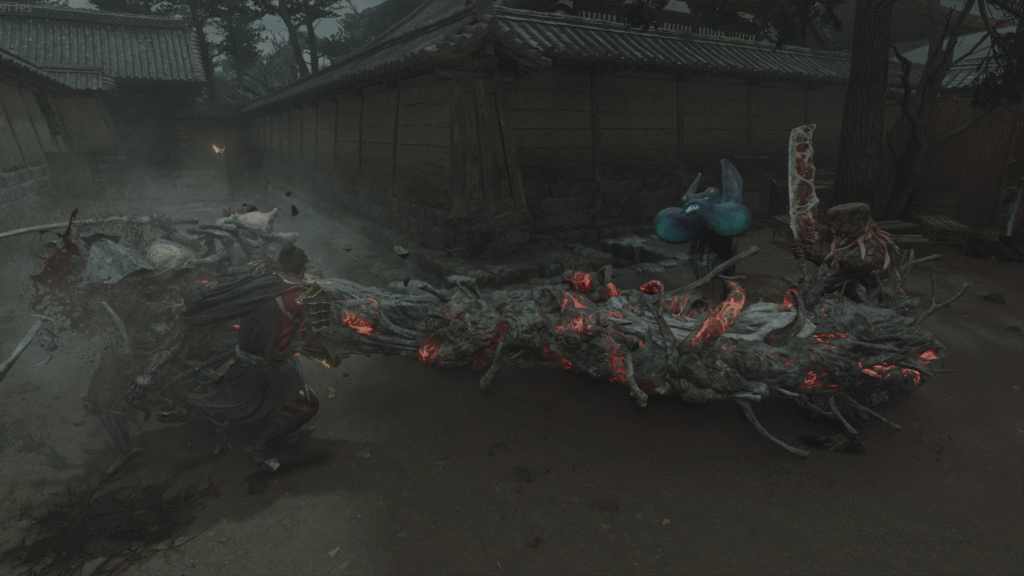
Outside of that, I was surprised to see that Onimusha: Way of the Sword mostly takes place on a single map based on Kyoto, save for a few other story zones that you can warp to freely. Most of Kyoto is locked at first, but you’ll clear it of corruption bit-by-bit until you’ve got free rein of the place. Then there’s a bunch of side content to do, although much of it isn’t too interesting. You’ll find hidden treasure, go to certain areas and kill x number of enemies, or do some story-focused ones too.
All of this rewards you with a bunch of different things that let you upgrade yourself. Your clothing, sword, and gauntlet (which grants you your Oni powers and lets you absorb souls that enemies drop) will continuously be upgraded with materials, but you’ll also use power and Oni stones to upgrade your regular and Oni abilities. You can also equip up to three charms that can be quite useful (and these, too, can be upgraded).
This all makes Onimusha: Way of the Sword feel very fleshed-out, plus the game will take well over 20 hours if you try to actually do everything. Beating the game unlocks a hard mode (which should have been unlocked by default), so you can jump into that in the event you want more.
This is an engaging game, but the repetition of the side content, lowish enemy variety, and rigidity of its mechanics diminish it somewhat. Still, this is another very good game from Capcom this year.
Onimusha: Way of the Sword: Something special for parry and fans of tight inputs, the new Onimusha has a lot of systems to master, even if some of the other facets fall to the wayside a bit. – Andrew Farrell
For a different kind of combat:
Doom: The Dark Ages – Revelations PC review — Spear me the details |