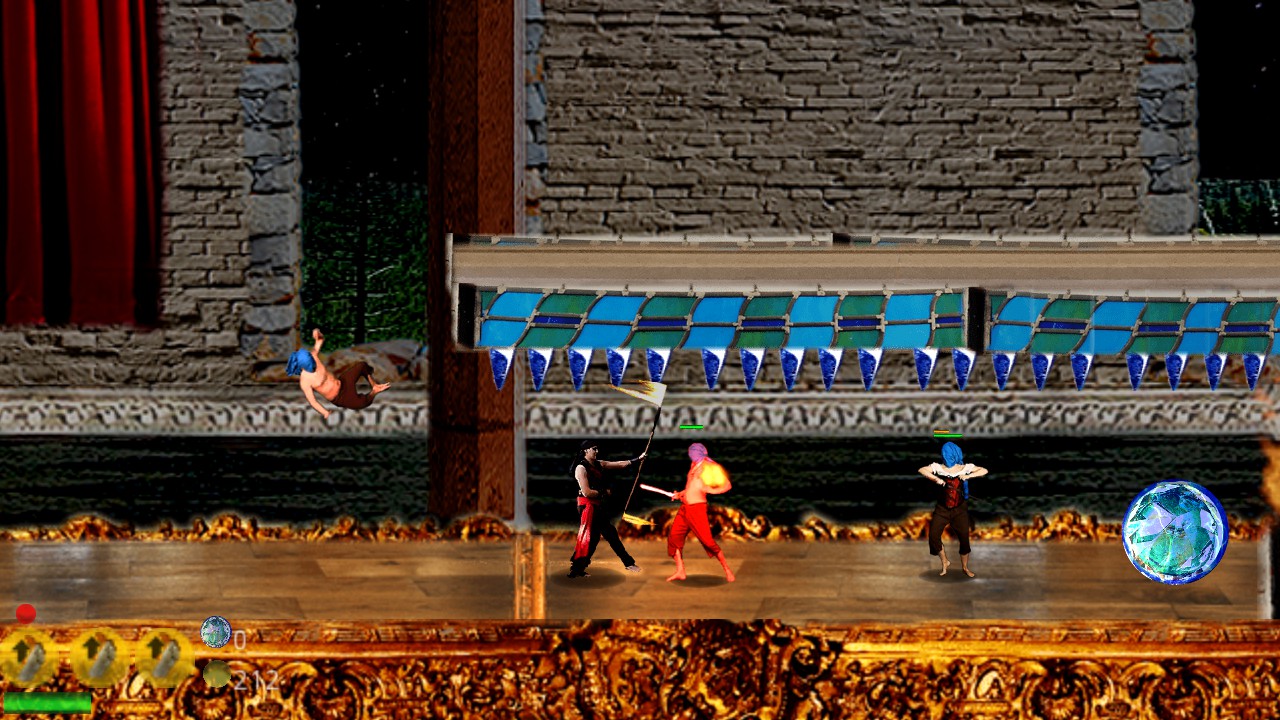
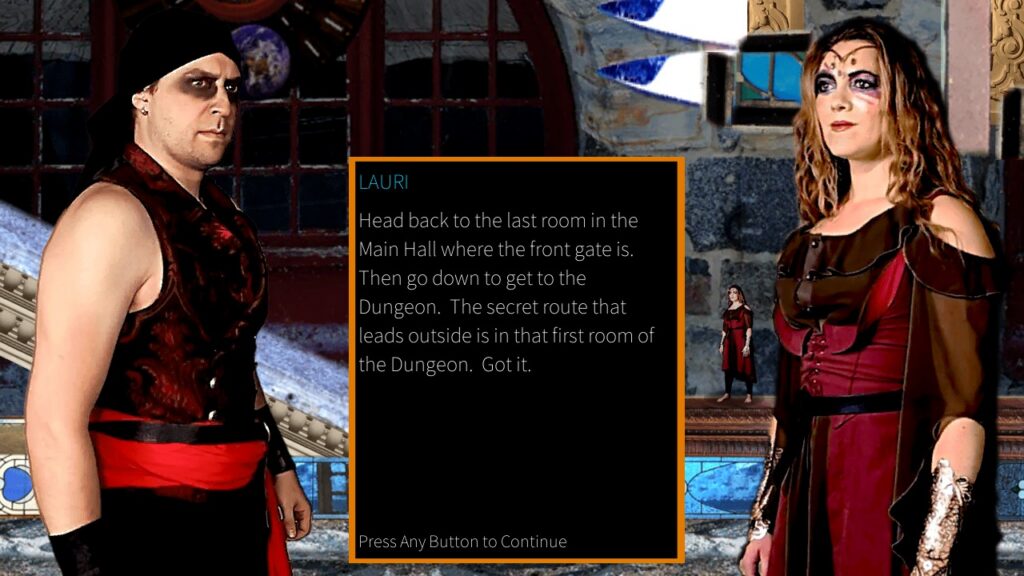
Without a doubt, Obey the Insect God is one of the strangest games I’ve seen in some time. All of the characters are digitized versions of actual actors, much like the old Mortal Kombat games; dialogue exchanges are fully void in addition to being long and detailed, and the game seems to intentionally scream “made on a shoestring budget” as well. It’s certainly an odd time, and that oddness won’t do it many favours in regard to potential success, so is the game worth picking up?
You play as a Finnish man named Lauri who has tracked his nation’s princess to the lair of the titular Insect God. With the help of an artificial spirit named Mariya, he aims to kill the god and return his princess to her rightful home. Mariya, who acts as the game’s repository of knowledge, gets the majority of the dialogue. Thankfully, her actor delivers her lines very well, in stark contrast to Lauri’s actor, who has a strong Finnish accent and somewhat awkward English delivery. Dialogue sequences have huge, detailed looping footage of the actors, too. It’s weird but kind of cool in its own way.
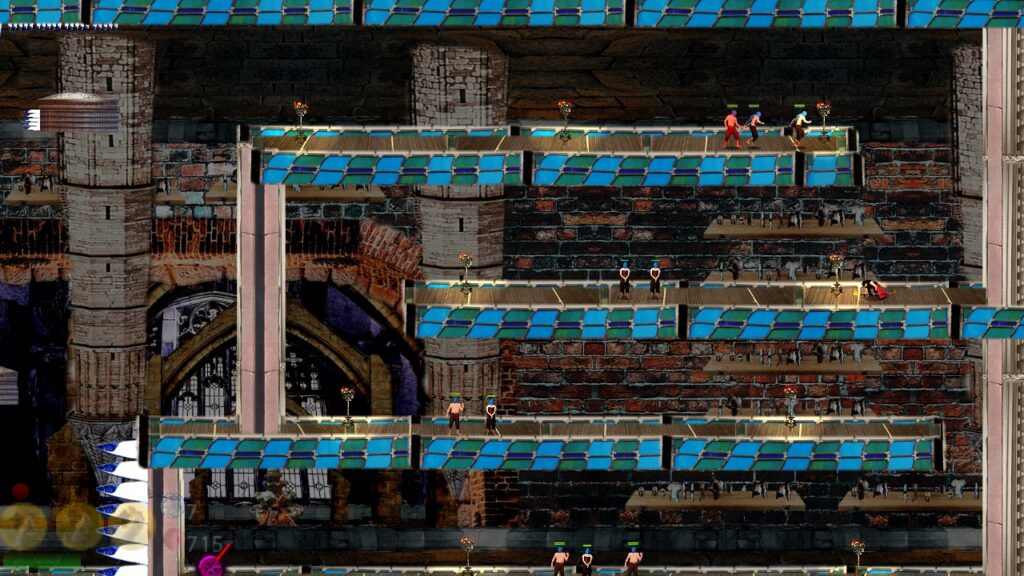
Speaking of weird, Obey the Insect God is billed as a Metroidvania, but it kind of forgoes some of what you might expect from them. For starters, the map is like no other map I’ve ever seen, not just because it looks so incredibly cheap. All the rooms are represented by boxes, many of which contain chests and levers. Instead of predominantly being about using abilities to explore new pathways, you’ll instead be focusing on flipping all the levers in a section to open the way forward. It’s a unique and somewhat unsatisfying progression method, but I’ll be damned if I’ve ever seen its like before.
Naturally, you’ll move around by jumping, double jumping, wall-climbing, and using abilities. The jumping feels kind of awful, but I think it’s intentionally meant to mimic the feel of old Mortal Kombat games, hence why it’s so floaty and rigid. It’s not a giant pain to deal with or anything, but the platforming just doesn’t feel good due to this. Similarly, the combat is also incredibly rigid, even if I do like that it’s based around a healthy amount of combos for each weapon. Certain combos even have launchers that you can use to juggle foes, but the combat is really janky and not all that pleasant.
By default, Lauri can also parry and do a little backdash to avoid damage, but I don’t care for these either. The parry’s timing doesn’t feel right, parries themselves aren’t really satisfying, and the little backdash is so short that it feels less than useful much of the time. Everything here is a bit of an odd choice, including the game’s save rooms. You’ll stumble upon these as you explore the game’s map, of course, but they’re a bit different from what you might expect. Upon dying, you respawn in a random save room in that section. If you want to go back closer to where you were, you need to pay with currency to teleport to another room, plus you have to spend this currency to heal. Since you lose nothing upon death, this is clearly the game’s way of keeping a penalty in play.
All of the above combine for a game that’s as unique as it is tedious to get through. As such, I don’t personally feel that it’s worth it, but I also definitely don’t dislike it. There’s something to be said about a game that isn’t afraid to attempt something interesting, even if the final product might not be considered “good” by most standards. It’s a strange game that plays by its own rules and doesn’t seem preoccupied by things like fun or tight design. Although I wouldn’t say it’s worth it, if any of this appeals to you, then you may very well feel differently. It’s worth a look at the very least.
Consider checking out our previous feature: